
SASHIKO BORO ARCHIVE,
A tactile collection of vintage Japanese folk textiles.
SASHIKO BORO ARCHIVE is a small textile archive on the upper floor of SASHIKO.LAB in Kyoto — one of the few places where visitors can see a standing collection of vintage sashiko and boro textiles up close, any time the atelier is open.
The collection includes sashiko-stitched workwear, boro textiles built up over years of repair, furoshiki, and other everyday cloth once used throughout rural Japan. These are not pieces chosen for their beauty. They are working textiles — patched, reinforced, and stitched back together by people who could not simply replace what wore out.
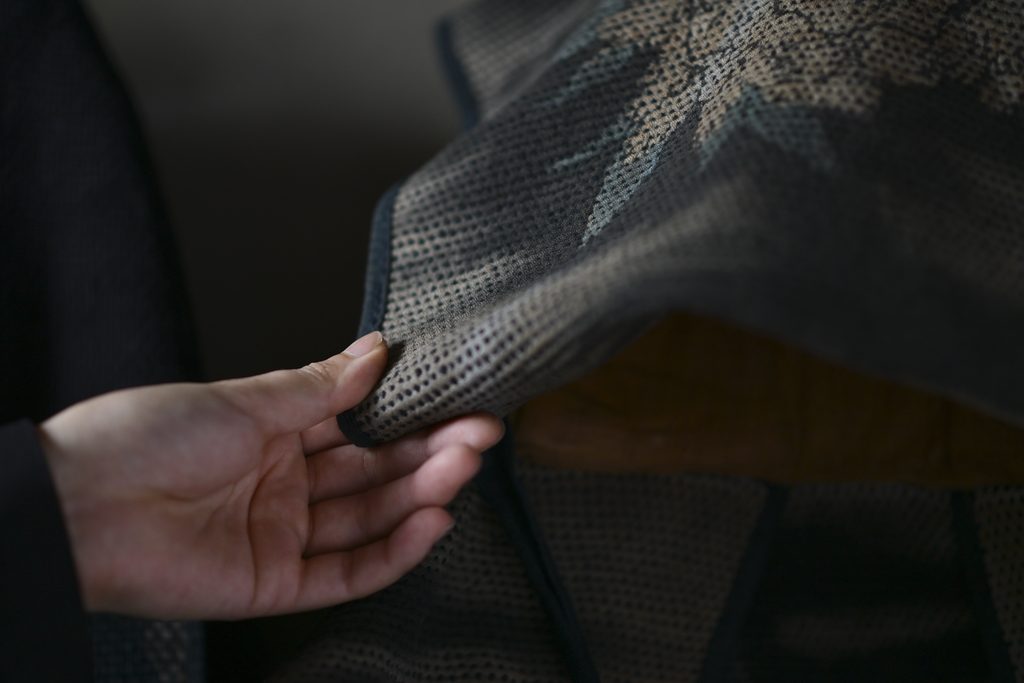
Here, every piece can be picked up and examined by hand. Nothing is kept behind glass. You can turn a garment over to see how a patch was placed from the back, feel how many layers of cloth were stitched together, and see exactly where a seam gave way and was mended again. Understanding sashiko means understanding how it feels, not only how it looks — and that is only possible when you can actually hold the cloth.
This kind of access is rare. Most historic sashiko and boro textiles are held in private collections or shown only briefly, behind glass, in temporary exhibitions. At SASHIKO.LAB, the collection lives inside a working atelier, where sashiko is still taught, stitched, and studied every day.

The Collection
The collection includes regional sashiko garments, furoshiki, workwear, and other everyday cloth used across Japan, along with boro textiles built up through repeated repair.
Regions and practices differ — techniques like kogin from Aomori or sashiko-reinforced workwear from other parts of Japan each developed under different local conditions: climate, available fabric, occupation, and household needs. Placed side by side, these pieces show how sashiko and boro were never one single tradition, but a set of practical responses shaped by region and circumstance.
A Different Way of Looking
Most textile collections keep historic garments behind glass. Here, you can pick them up. Every piece in the archive can be examined at close range and handled directly. Turn a garment over to see how a patch was placed from the back. Feel where fabric was layered again and again to reinforce a worn seam. Notice the weight of cloth that was mended rather than replaced.
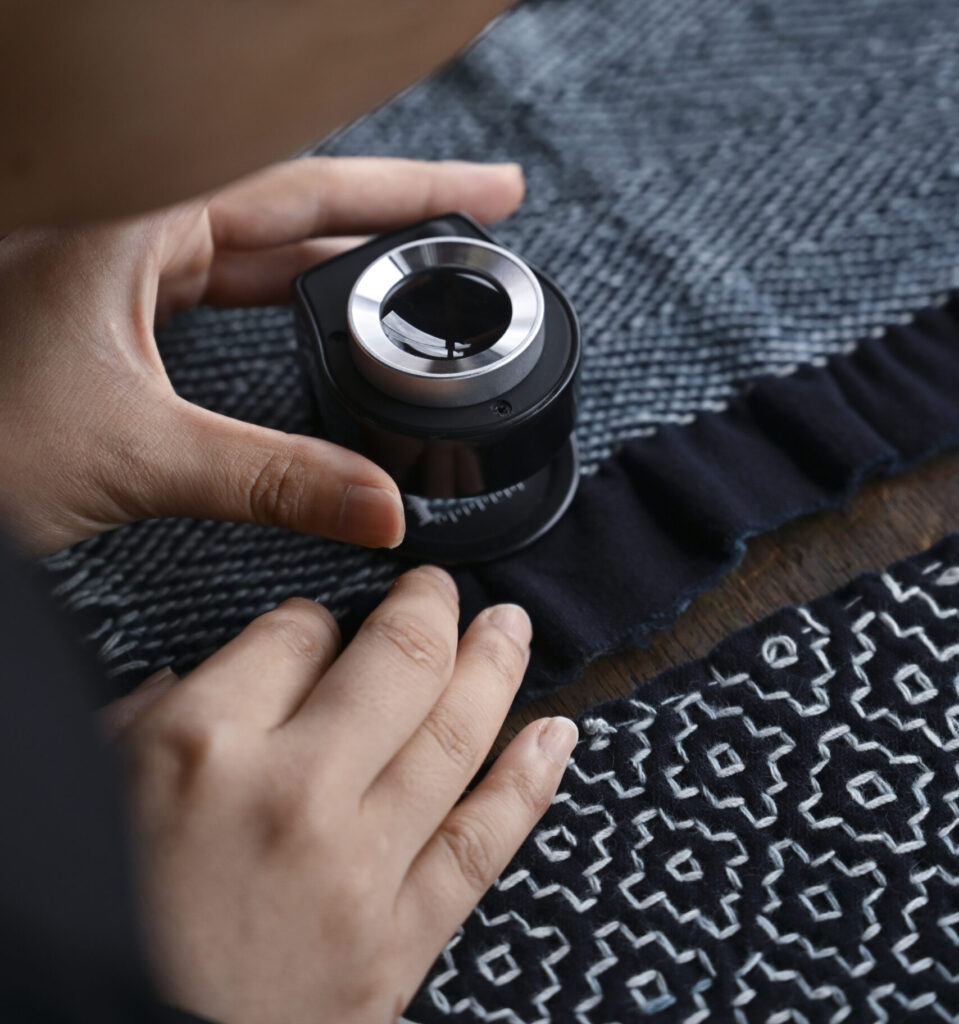
A viewing station with linen testers is also available, so visitors can look closely at weave structure and stitch density — the kind of detail that is easy to miss with the eye alone.
This is not a passive viewing experience. Looking closely — and touching — is how these textiles are actually understood: not simply as objects to admire, but as cloth that was worn, repaired, and kept in use by people whose names we don’t know.
The Building
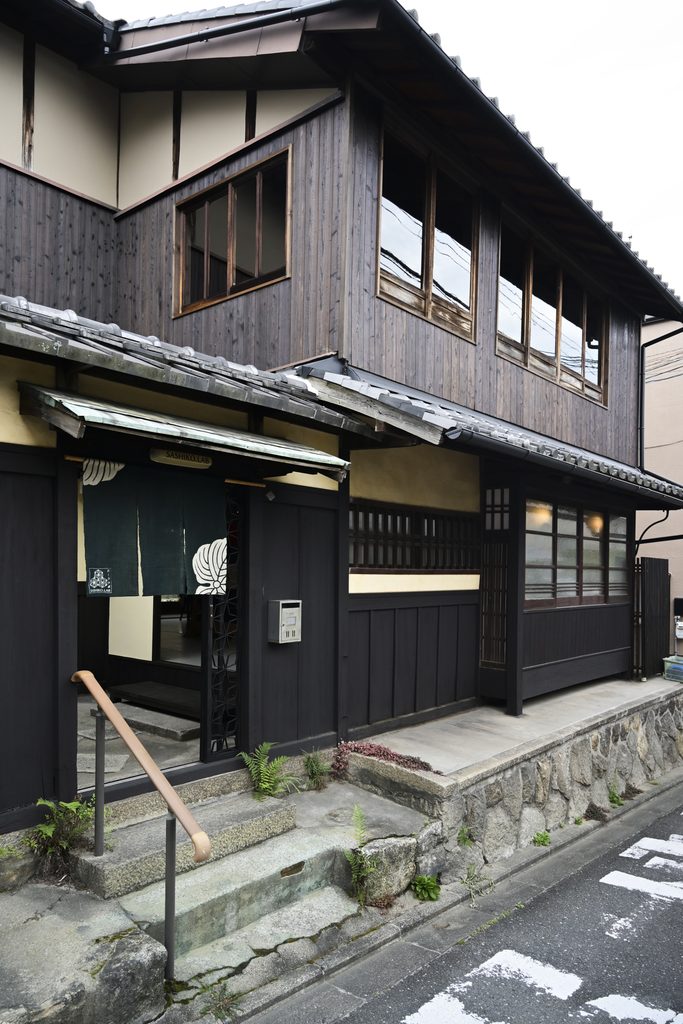
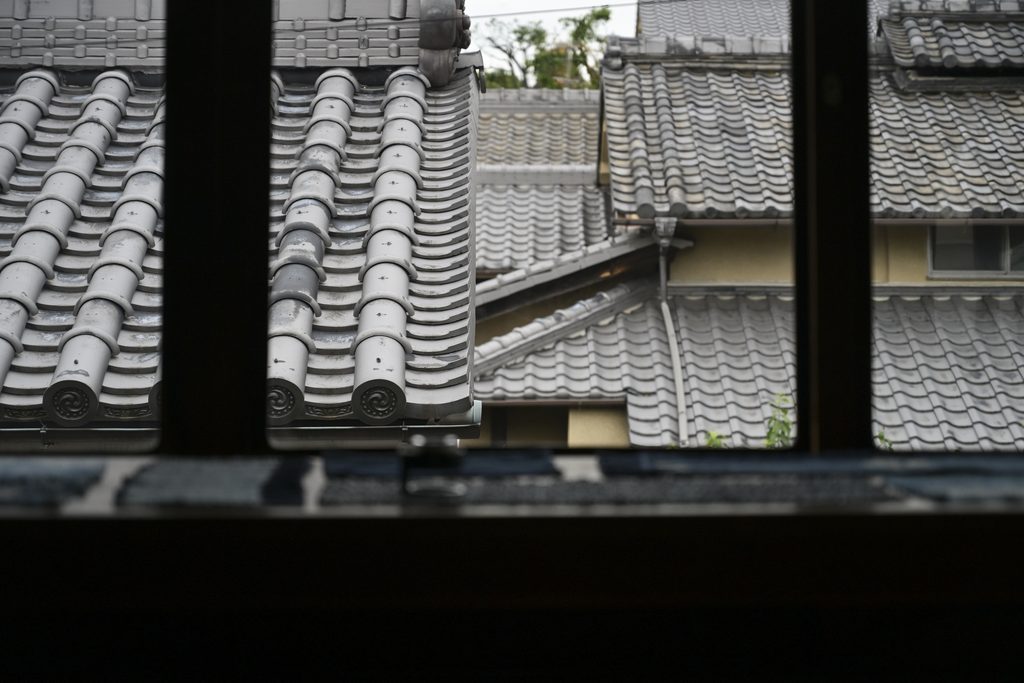
The archive is housed on the upper floor of a roughly 120-year-old machiya — itself worth a slow look, from the timber structure to the old wavy glass windows, where the light shifts and softens as it passes through onto the textiles beyond. Through the glass, rows of tiled roofs stretch out toward the trees of Mount Inari in the distance.
Fushimi Inari Taisha, one of Kyoto’s most visited sites, is only a few minutes away. Yet here, above the crowds, visitors can spend a calm hour looking closely at cloth.
Visitor Information
Location : Second Floor, SASHIKO.LAB
Admission : 1,000 JPY
Workshop participants : Free admission
Opening Days : Same schedule as SASHIKO.LAB
Photography : Non-flash photography permitted unless otherwise noted.
Accessibility : The archive is located on the second floor and is accessible only by stairs.
No reservation is required — simply visit during SASHIKO.LAB’s opening hours.